


Understanding How Spinal Decompression May Help Relieve Sciatica Symptoms
Sciatica can be one of the most frustrating types of nerve-related pain. Many people experience discomfort that starts in the lower back and travels through the buttock and down the leg. Depending on the cause, symptoms may include tingling, numbness, muscle weakness, or sharp pain that makes sitting, standing, or walking uncomfortable.
Because sciatica often results from irritation or compression of lumbar nerve roots, treatment typically focuses on reducing nerve pressure, improving function, and helping patients stay active. One non-surgical option many patients explore is spinal decompression therapy. At Physical Healthcare of Jacksonville, spinal decompression is often included in personalized care plans to improve mobility and reduce sciatica-related discomfort. We'll explain how it works, its potential benefits, and whether it may be right for you.
Disclaimer: This article is for informational purposes only and is not intended as medical advice. If you are experiencing symptoms after a car accident, consult a qualified healthcare professional.
What Is Sciatica?
Sciatica is not a condition itself but a collection of symptoms caused by irritation or compression of the sciatic nerve. The sciatic nerve is the largest nerve in the body and travels from the lower spine through the hips, buttocks, and down each leg.
When structures in the lower spine place pressure on the nerve or its roots, symptoms may develop along the nerve's pathway. Some patients experience occasional discomfort, while others develop persistent leg pain, numbness, tingling, or weakness that affects daily activities.
What Causes Sciatica?
Sciatica can develop from several spinal conditions that create nerve compression in the lower back. In many cases, the problem originates within the lumbar spine, where discs, joints, or surrounding tissues begin placing pressure on spinal nerves.
Common causes include:
- Herniated discs
- Bulging discs
- Lumbar spinal stenosis
- Degenerative changes within the spine
- Bone spurs
- Some structural conditions such as spondylolisthesis.
Symptom severity may be influenced by the degree and duration of nerve irritation, inflammation, and individual health factors.
Signs, Symptoms, and Functional Impact
Sciatica symptoms can vary depending on the location and severity of nerve involvement. Some individuals experience mild discomfort, while others develop significant symptoms that interfere with work, exercise, and daily life.
Common symptoms may include:
- Lower back pain
- Leg pain that radiates below the knee
- Tingling sensations
- Numbness
- Muscle weakness
- Burning or shooting pain
- Increased discomfort while sitting for long periods
When symptoms persist, they may limit physical activity, affect sleep quality, and make routine movements more challenging.
Can Spinal Decompression Help Sciatica?
For many patients, spinal decompression therapy may be a beneficial non-surgical treatment option for managing sciatica. The therapy is designed to gently stretch the spine and reduce pressure on spinal discs, nerve roots, and surrounding tissues that may be contributing to symptoms.
While spinal decompression is not appropriate for every case, many patients report improvements in comfort, mobility, and leg symptoms when decompression is incorporated into a broader treatment plan. The goal is to reduce mechanical irritation where appropriate and support function as part of a broader rehabilitation plan.
How Spinal Decompression Works
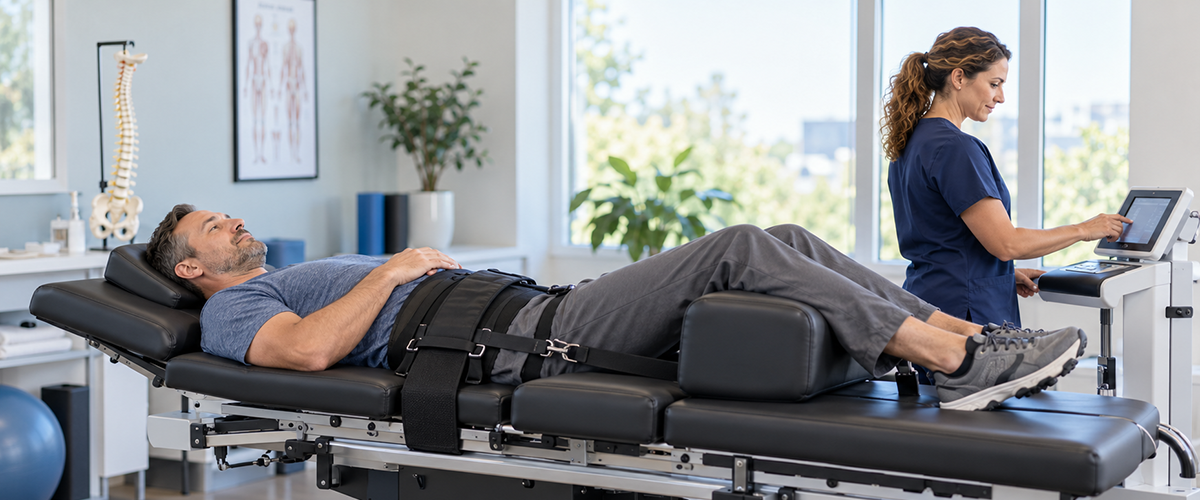
Spinal decompression therapy uses a specialized traction table that gently stretches the spine in a controlled manner. During treatment, patients typically lie comfortably while the table applies carefully controlled forces designed to reduce pressure on spinal discs and surrounding structures.
One proposed mechanism is the creation of negative pressure within the intervertebral discs. This may help reduce pressure on affected nerves and may promote the movement of fluids within the discs, although the extent of these effects and their clinical significance remain areas of ongoing research.
By reducing stress on affected spinal structures, decompression therapy may help:
- Reduce pressure on irritated nerves
- Relieve sciatica symptoms
- Improve mobility
- Decrease stress on spinal discs
- Support overall spinal function
Research on spinal decompression shows mixed results, and it is generally considered one of several non-surgical treatment options that may be used alongside exercise-based rehabilitation and physical therapy.
Conditions That May Benefit From Spinal Decompression
Spinal decompression is often considered for patients experiencing disc-related conditions that contribute to nerve compression. While not every patient is a good candidate, decompression may be incorporated into care plans for several common spinal conditions.
Herniated discs and bulging discs are among the most common reasons patients seek decompression therapy. When disc material places pressure on nearby nerves, symptoms such as sciatica pain, numbness, and weakness may develop.
Patients with lumbar spinal stenosis or certain degenerative spinal conditions may also benefit from decompression as part of a broader treatment strategy. A thorough evaluation helps determine whether the therapy is appropriate based on the patient's symptoms, health history, and overall condition.
What to Expect During Care
Spinal decompression treatment begins with an evaluation to determine whether the therapy is appropriate for your condition.
1. Initial Assessment
Your provider will review your symptoms, health history, mobility, and any available imaging studies.
2. Spinal Decompression Sessions
During treatment, you will lie on a specialized table while gentle, controlled stretching is applied to the spine.
3. Personalized Care Plan
The number of sessions recommended depends on your symptoms, condition, and treatment goals.
The goal is to help improve function, reduce discomfort, and support long-term spinal health.
How Spinal Decompression Fits Into a Broader Recovery Plan
At Physical Healthcare of Jacksonville, spinal decompression is often incorporated into personalized treatment plans for patients experiencing sciatica and other disc-related conditions. Care recommendations are based on each patient's symptoms, health history, and functional goals.
Spinal decompression focuses on reducing pressure on spinal discs and nerves through controlled, non-surgical traction. For many patients, it serves as one component of a broader approach aimed at improving mobility, function, and overall spinal health.
Because every case of sciatica is different, treatment plans may be adjusted as symptoms change and progress is monitored. This individualized approach helps ensure care remains aligned with each patient's needs and recovery goals.
Is Spinal Decompression Right for You?
You may benefit from a professional evaluation if you:
- Experience sciatica pain that travels into the leg
- Have numbness or tingling in the lower extremities
- Have been diagnosed with a herniated disc or bulging disc
- Experience symptoms that worsen while sitting
- Want to explore non-surgical treatment options
- Continue to experience symptoms despite rest or home care
A comprehensive assessment can help determine whether spinal decompression may be an appropriate part of your treatment plan.
FAQs
Spinal decompression therapy may help reduce pressure on spinal nerves and discs that contribute to sciatica symptoms. Many patients report improvements in pain, mobility, and overall comfort when decompression is included in a comprehensive treatment plan.
The therapy gently stretches the spine to reduce pressure on affected nerves and spinal discs. This process may help improve circulation, support disc health, and decrease nerve irritation.
No. Spinal decompression therapy is a non-invasive, non-surgical treatment that uses a specialized traction table. It is different from spinal decompression surgeries such as lumbar decompression surgery or spinal fusion procedures.
In some cases, yes. Spinal decompression may help reduce pressure associated with herniated discs and support the movement of fluids into affected discs as part of the healing process.
Individual sessions often last between 15 and 30 minutes, although treatment plans vary. The number of sessions recommended depends on the patient's condition and response to care.
Most patients tolerate spinal decompression well and describe the treatment as gentle. Providers adjust treatment settings based on patient comfort and clinical needs.
Patients with sciatica, herniated discs, bulging discs, or certain forms of nerve compression may be candidates. A professional evaluation is necessary to determine whether the treatment is appropriate for a specific condition.
Learn More About Your Sciatica Treatment Options
Sciatica can make everyday activities difficult, but understanding the source of your symptoms is an important step toward finding effective treatment. For patients experiencing nerve-related leg pain, spinal decompression therapy may offer a non-surgical option that supports comfort, mobility, and overall spinal health.
At Physical Healthcare of Jacksonville, we provide comprehensive evaluations and personalized treatment plans for patients dealing with sciatica and other spinal conditions. If you're looking for answers about your symptoms or exploring non-surgical treatment options, we're here to help.
Schedule a consultation today to learn more about your treatment options.


